Stewartstown, PA · Camera Inspection
Drain Camera Inspection in Stewartstown
Stop guessing about what is clogging your line. A drain camera inspection puts a live video picture of your pipe on a monitor, so you can see the cause before anyone recommends work. Call (223) 204-1758 and a local camera pro can go over the video with you.
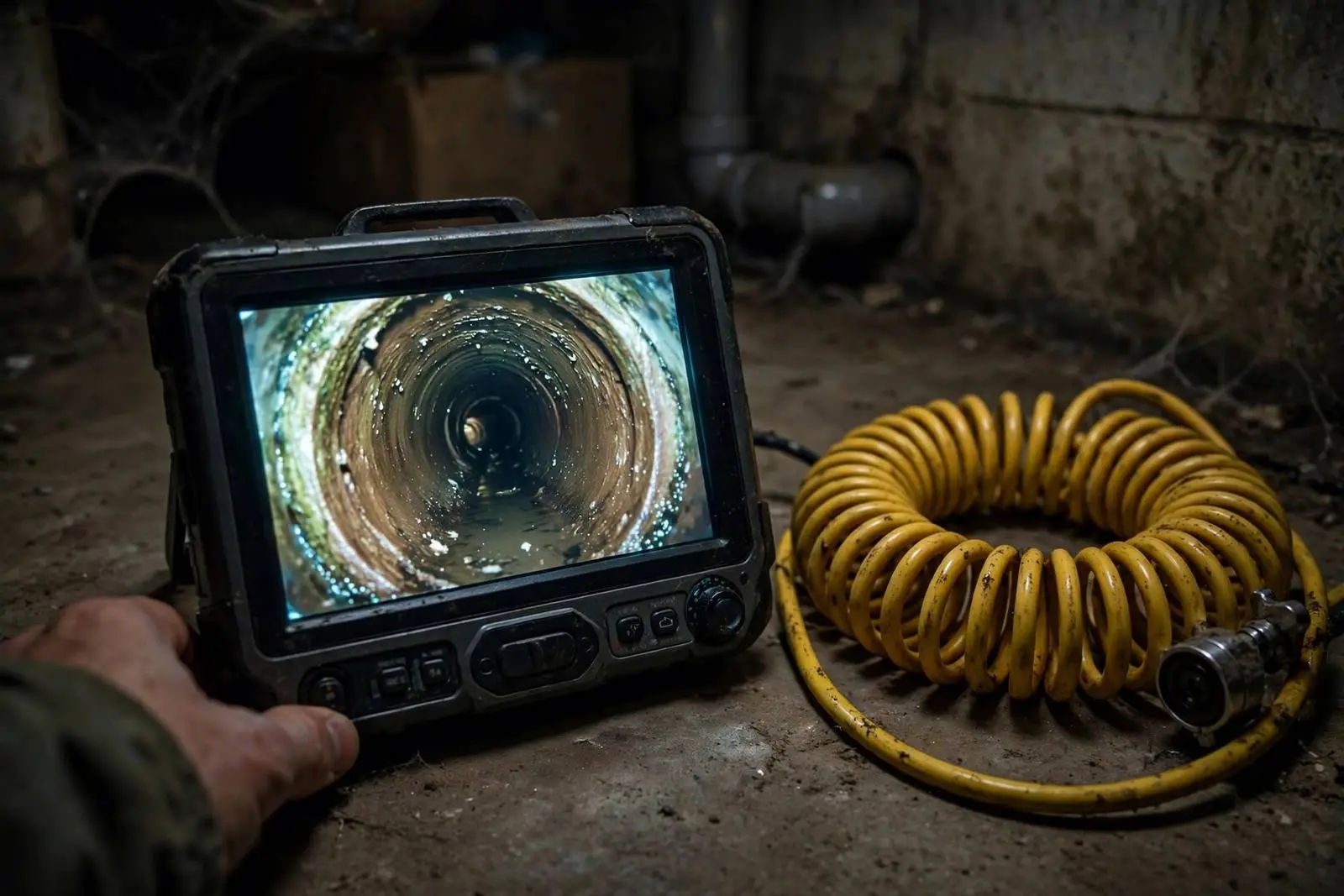
Clearing a drain and finding out why it keeps clogging are different jobs. Snaking or jetting opens the line, but neither one tells you what caused the blockage in the first place. When the same drain keeps failing, a drain camera inspection answers the why. A small waterproof camera travels through your line and sends live video to a monitor, and you get to watch the inside of your own pipe.
That picture helps you see what the line needs before you pay for work. In the Stewartstown borough, where older homes have aged laterals and tree roots, the camera often finds roots entering through the joints. That is why a camera inspection is often the first recommendation after a second repeat clog. Around Stewartstown, many Hopewell and East Hopewell Township homes run on septic, and the camera shows whether a slow drain is a line problem or a tank-side issue. Call (223) 204-1758 and we will connect you with experienced local pros who show you the video and explain it in plain language.
At a glance
- A waterproof camera rides through your line and shows the inside on video.
- The pro can pinpoint the problem spot, so any work stays targeted.
- Clearing a drain and learning why it keeps clogging are different jobs; the camera is the why tool.
When a drain camera inspection in Stewartstown makes sense
A repeat clog is a common reason to schedule one. If the same drain has been cleared twice and it slows down again, clearing it a third time without looking is just renting the same result. A camera inspection shows what the cable or jetter left behind: a wall of grease, a root mass, a belly holding water, or a cracked section catching debris. Once you can see it, the fix stops being a guess.
An inspection also makes sense before bigger decisions. Homeowners thinking about jetting want to know the pipe is sound first. Homebuyers want to know the condition of a lateral they are about to own. And when a floor drain cleaning or an emergency drain cleaning visit reveals a main line that keeps backing up, the camera turns an emergency into a plan. If your drains are simply slow everywhere at once, that whole-house symptom is another strong reason to look.
- The same drain clogs again after every clearing
- You are considering jetting and want to confirm the pipe is sound
- You are buying a home and want to see the lateral first
What the drain line camera can show: roots, bellies, offsets, cracks and build-up
Roots show up as pale, hairlike masses waving in the flow, usually at a joint. A belly shows as a low section where water sits instead of draining away, and you can watch debris settle there. An offset shows as a step where one pipe section has shifted away from the next, creating a lip that catches paper and waste. Cracks show as dark lines across the pipe wall, sometimes with roots or soil pressing in.
Build-up has its own look: grease coats the walls in a rough yellow-brown layer, scale crusts cast iron in hard nodules, and sludge settles in long drifts along the bottom. A video pipe inspection lets the pro read these signs the way a mechanic reads an engine, and a camera inspection is how homeowners get that reading before committing to work. For homeowners arranging drain cleaning in Hopewell Township with long runs out to a septic tank, the video also shows exactly where the line ends and the tank begins, so clearing work stays on the drain side only.
- Root intrusions at joints and cracks
- Bellies, offsets and breaks in the line
- Grease, scale and sludge coating the walls
| Finding | How it looks on screen | What usually follows |
|---|---|---|
| Roots | Hair-like masses at the joints | Clearing, then a follow-up look |
| Belly | Standing water in a low section | Discussion of repair options |
| Offset joint | A pipe edge out of line with the next | Discussion of repair options |
| Crack or break | A visible split or missing section | Discussion of repair options |
| Buildup | A rough coating narrowing the pipe | Clearing or jetting |
Calls answered 24/7
Call now and get it flowing againHow a sewer camera inspection finds the exact problem spot
Seeing the problem is only half the value; knowing where it sits underground is the other half. The camera head carries a small transmitter, and the pro walks the yard above with a locator receiver that picks up the signal. That lets the pro mark the spot on the surface and read how deep the pipe runs at that point, which is why it is worth asking about a locator pass.
This matters when the fix involves digging or targeted repair. Without a location, a repair crew has to expose a long stretch of line to find the bad section. With the camera and locator, the work stays focused on the few feet that actually need attention. Homeowners scheduling drain cleaning in East Hopewell Township with long rural runs find this especially useful, since their lines often travel a good distance from the house.
Repeat clogs and the camera: finding the why behind the blockage
Every repeat clog has a reason, and the camera is how you meet it. A kitchen line that keeps slowing may show a grease wall the cable punched through but never removed. A basement drain that backs up in wet weather may show a belly that collects debris until the flow chokes. A whole-house slowdown may show a root mass at the joint closest to the largest nearby tree.
Once the why is visible, the recommendation changes from another clearing to a real plan. Grease walls point toward jetting. A single bad joint points toward a targeted repair. A belly points toward watching and maintaining rather than clearing blindly. That is the signature value of a camera inspection: it separates clearing the drain from finding why it keeps clogging, and it keeps you from paying for the same temporary fix twice.
Buying a home: why a video pipe inspection helps before you sign
A sewer lateral repair can be a major cost, and a standard home inspection rarely looks at it. A video pipe inspection before closing shows the condition of the line you are about to own: sound pipe, root intrusion, or damage the seller may not even know about. It is a small step that can change the negotiation or save you from a surprise after move-in.
In the Stewartstown borough especially, where older homes come with aged laterals, buyers use the video as part of their due diligence. The pro records what the camera sees and explains it in plain terms, so you know whether you are buying a clean line or inheriting a project. A camera inspection is easy to schedule before the inspection window closes. Call (223) 204-1758 and we will connect you with a local pro who has a camera rig where one is available.
Calls answered 24/7 in Stewartstown
Talk to a drain cleaning pro nowFrequently asked questions
What will a drain camera inspection show me?
A camera inspection shows the inside of your line on live video: roots, cracks, bellies, offsets, build-up and standing water. The pro explains what each thing means in plain language as you watch. You leave knowing what is actually in your pipe instead of guessing.
Do I get to watch the video myself?
Yes. The camera sends live video to a monitor, and the pro walks you through what you are seeing. If you want a record, ask the pro about saving the footage so you can keep it with your home records.
Can the camera show exactly where the problem is?
Yes. The camera head sends a signal that a locator receiver picks up from the surface. The pro can mark the spot above ground and tell you how deep the pipe runs there. That keeps any repair work targeted instead of exploratory.
Is an inspection worth it before buying a house?
Usually yes, especially with older homes. The sewer lateral is costly to repair and a standard home inspection rarely checks it. A drain camera inspection before closing shows the condition of the line on video, so you know whether you are buying sound pipe or inheriting a problem.
How long does a camera inspection take?
Most home inspections move quickly. The camera travels the line in one pass and the pro reviews the findings with you on the monitor right after. Larger or hard-to-access lines take a little longer, and the pro will set expectations when you call.
Can the inspection camera go through a toilet?
The preferred entry is a cleanout, which gives a straight path into the line. If your home has no cleanout, the pro can sometimes pull a toilet to gain access. The pro will look at your layout and choose the entry that fits.
What happens if the camera finds damage?
During a drain camera inspection, if damage appears, the pro shows it to you on video and explains your options in plain terms. Clearing can still handle build-up, while cracked or collapsed sections call for repair work. Major excavation and replacement are outside our scope, and the pro can point you toward the right next step.
Does the clog have to be cleared before the camera goes in?
Not always. The camera can travel through standing water and show a surprising amount. If the line is packed solid, the pro may clear a path first so the camera can pass. A slow drain can usually be inspected as it is.
See inside your line with a drain camera inspection
Guessing at a drain problem is how the same clog gets cleared three times. A camera inspection shows the why behind the blockage, on video, in plain language. Call (223) 204-1758 to reach an experienced local pro who looks first and recommends only the work your line actually needs. For an overview of every service and area, start with drain cleaning in Stewartstown. If the problem keeps coming back, hydro jetting or main line drain cleaning may be the next step.