Stewartstown, PA · Floor and Laundry Drains
Floor Drain Cleaning in Stewartstown
Water spreading across the basement floor usually means a clogged floor or laundry drain. A professional floor drain clearing removes lint, sludge and standpipe backups. Call (223) 204-1758 to reach a local pro who handles basement and laundry drains.
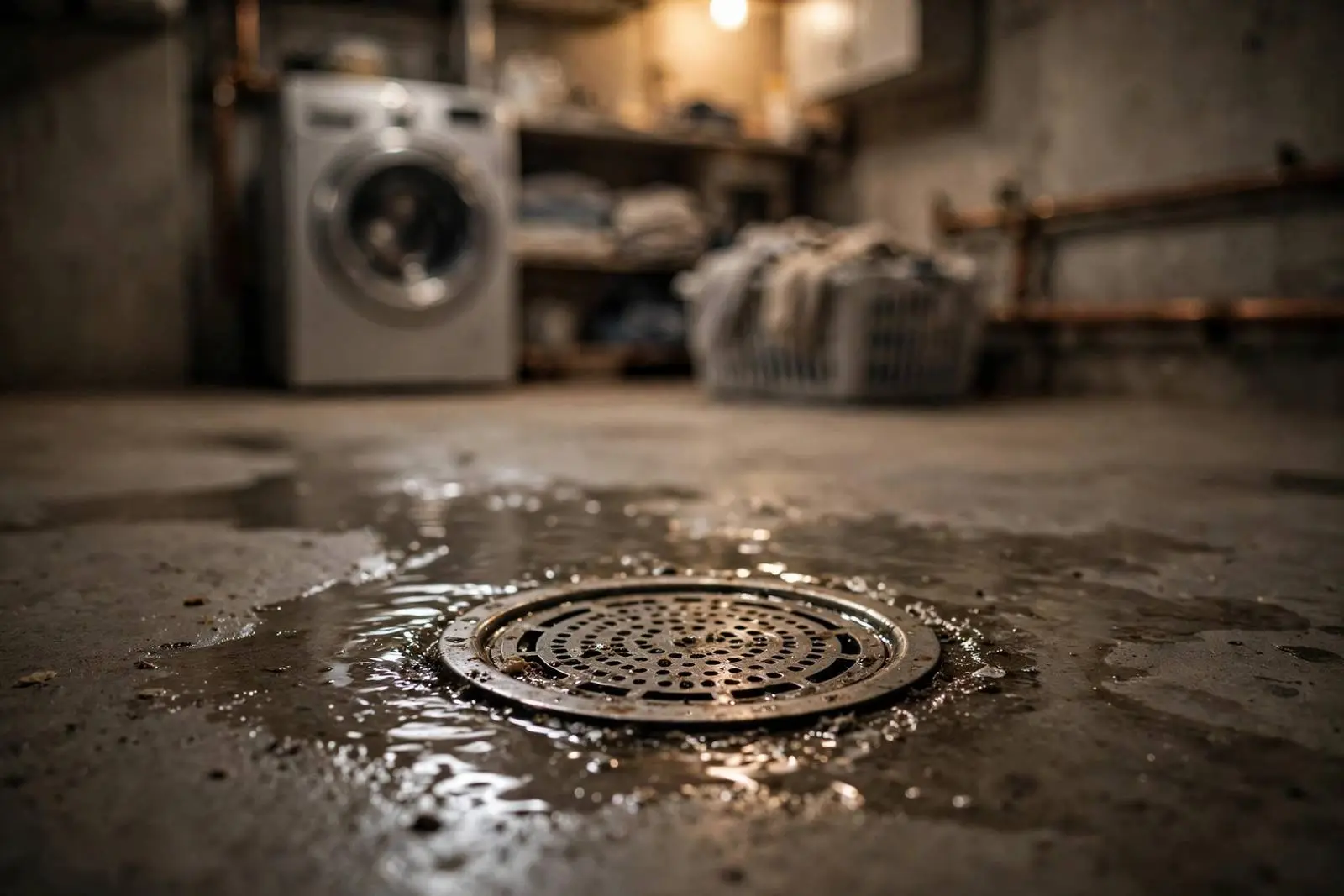
The basement floor drain is the lowest drain in the house, which makes it the first place trouble shows up. When a laundry standpipe overflows or a floor drain starts spreading water across the concrete, the cause is usually close by: lint and sludge in the branch line, or a restriction in the main line pushing water up through the lowest opening. Professional floor drain cleaning handles both, and the pro starts by finding which one you have.
Borough homes with older basements see this often, since their floor drains have collected years of silt and lint. Homes on septic in Hopewell and East Hopewell Townships can see it too, when a line slows on its way to the tank. Until the pro arrives, stop the washer and stop running water into the affected drains. Call (223) 204-1758 and we will connect you with a local pro where one is available.
At a glance
- Clears basement floor drains, laundry standpipes and washer drain lines.
- Finds whether the trouble is one fixture or the main line.
- One call connects you with experienced local pros for same-day help where available.
Laundry drain backing up: lint and standpipe overflows
Modern washers can pump water out faster than an older standpipe was sized for. When the drain cannot take the flow, water climbs the standpipe and spills onto the floor. A partial clog from lint and soap scum makes it worse, because the line was already narrowed before the washer hit it with a full load.
Laundry drain backing up like this is a common reason homeowners call for floor drain service. The fix usually means clearing the standpipe line of lint, soap and sludge, and the pro will check whether the line itself is undersized for the washer. A simple lint catcher on the washer discharge hose is a cheap habit that slows the next build-up, and the pro can show you what to look for.
- Washer discharge hoses with no lint catcher
- Standpipes narrowed by soap scum and lint
- Partial clogs that only show up during the pump cycle
Basement floor drain clogs: what floor drain cleaning in Stewartstown covers
A basement floor drain clog is usually silt, lint and sludge settled into the trap and the branch line. Floor drains do not get the regular flushing that a sink or shower gives, so debris sits and hardens. The pro clears the trap and the line with a cable or jetter sized for the pipe, then runs water to confirm the drain takes flow again.
Sometimes the floor drain is just the messenger. If the main line is restricted, wastewater takes the lowest exit it can find, and that is the basement floor drain. When water comes up the floor drain while a toilet or shower is running upstairs, the pro treats it as a possible main-line problem and checks the whole line, not just the fixture. That distinction is exactly what a drain service in Stewartstown Borough visit sorts out in an older basement, and it matters for drain cleaning in East Hopewell Township homes where long runs can hide a restriction.
- Silt, lint and sludge settled in the trap
- Branch-line clogs near the laundry area
- Main-line restrictions pushing water up through the lowest drain
| What you notice | Likely cause |
|---|---|
| Smell, but the drain works | Dried-out trap |
| Water around the laundry standpipe | Lint clog in the standpipe or its trap |
| Floor drain backs up when the washer runs | Restriction in the floor drain or the main line |
| Floor drain backs up when other fixtures run | Main line blockage |
Same-day dispatch where available
Ask about same-day availabilityDried-out traps and the smells coming from your floor drain
A floor drain that smells but drains fine usually has a dried-out trap. Every drain has a U-shaped trap that holds water as a seal against sewer gas, and a floor drain nobody uses can let that water evaporate. Once the seal is gone, odors drift up from the line below. Pouring a bucket of water into the drain restores the seal, and doing it regularly keeps the smell away.
If the smell returns quickly after refilling the trap, something else may be going on: a partial blockage holding stagnant water, or a venting issue letting gas past the seal. A washing machine drain overflow nearby can also leave soapy residue that sours, which is when floor drain service turns into a main-line diagnosis. The pro can tell the difference between a dry trap and a symptom of a bigger problem, and will say so honestly.
Low-lying basements and backups in storm season
Heavy rain puts extra water into the ground around your foundation, and some of it finds its way toward basement drains. In a low-lying basement, a floor drain can burp up water during or after a long wet stretch even when nothing is wrong with the plumbing fixtures themselves. The drain is doing its job as a relief point; the question is where the water is coming from.
A pro doing this work sorts that out by checking whether the line is restricted or simply overwhelmed. Clearing the drain helps when sludge and silt are narrowing the path. When the line is clear and water still rises in wet weather, the conversation turns to options like a backwater valve or a sump setup, which are separate projects a plumber can explain. Either way, keep stored items off the basement floor during storm season and know where your cleanout is.
Backwater valves, explained in plain terms
A backwater valve is a one-way device fitted on the main drain line. Water flowing out of the house pushes a small flap open and passes through. When flow tries to come back toward the house, the flap closes and blocks it. It is a simple idea: your wastewater gets out, and a surging main cannot push its contents back into your basement.
These valves need the right placement and occasional attention to keep working, since debris can keep the flap from seating. They are not a cure for a clogged line, and they do not replace clearing a restriction. But for homes whose floor drains have backed up more than once, a pro can explain whether one fits your layout. An emergency drain cleaning visit that ends with a second backup a month later is often what starts that conversation, and a kitchen drain cleaning call can reveal a main line that affects the basement too.
Techs who know Stewartstown homes
Speak with a local drain cleaning techFrequently asked questions
Why does my washing machine overflow the standpipe?
The standpipe or its line is usually narrowed by lint and soap scum, and the washer pumps water faster than the restricted line can take. Water climbs the pipe and spills over. Clearing the line restores the flow, and a lint catcher on the discharge hose slows the next build-up.
Why does my basement floor drain smell?
Most often the trap has dried out. The water seal in the U-bend evaporates in drains nobody uses, letting odors rise. Pouring a bucket of water into the drain restores the seal. If the smell comes back fast, a professional visit can check for a blockage or venting issue.
Why is water coming up through my floor drain?
Water takes the lowest exit available. If the main line is restricted, wastewater from upstairs fixtures can push up through the basement floor drain. This often signals a main-line problem rather than a single clogged fixture, which is why this service includes checking the whole line, not just the fixture.
Can a clogged floor drain be cleared the same day?
Same-day availability depends on the pro, so ask when you call. We connect you with experienced local pros, and the pro will arrange the earliest available visit. Stop running water into the affected drains and call (223) 204-1758 to get it scheduled.
Is a floor drain backup a main line problem?
Often, but not always. A floor drain can clog on its own from silt and lint, especially one that rarely gets flushed. When the backup happens while other fixtures are running, the main line is the likelier culprit, and a professional visit is how the pro finds which one you have.
What is a backwater valve?
It is a one-way valve on the main drain line that lets wastewater flow out and closes against flow coming back in. It protects the basement from water pushed back through the line. It needs correct placement and occasional attention, which a pro can explain for your layout.
Can laundry lint really clog a drain?
Yes. Lint combines with soap scum and hardens into a dense mat inside the line, and years of it can narrow a standpipe badly. A lint catcher on the washer hose catches most of it before it enters the drain. It is a small habit that prevents a big service call.
Should I put chemicals or cleaners in my floor drain?
No. Chemical drain cleaners can damage pipes and make professional clearing harder and more hazardous. For a smelly but working drain, plain water in the trap is the safe step. For a clogged drain, call a pro instead of pouring products into it.
Floor drain cleaning that finds the real cause
Water on the basement floor is stressful, but most causes are straightforward once a pro looks. Floor drain cleaning in Stewartstown clears the lint, sludge and standpipe clogs, and just as importantly, it finds whether the main line is behind the trouble. Call (223) 204-1758 and a local drain pro will clear it and tell you honestly what they found. For an overview of every service and area, start with drain cleaning in Stewartstown. If the problem keeps coming back, main line drain cleaning or kitchen drain cleaning may be the next step.
Check availability in Stewartstown
Serving Stewartstown, PA and nearby townships
Call now: (223) 204-1758